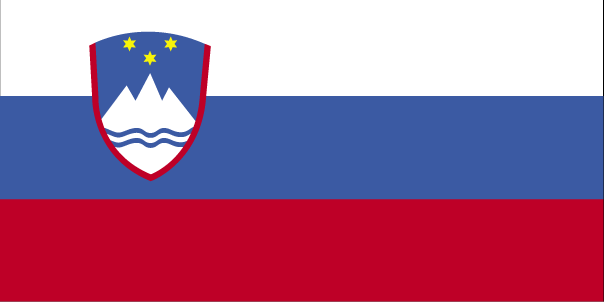
Slovenia Missions


Sloveniamissions.org
The Pahers
Slovenia Missions carries the vision of Global Harvest Ministries into the country of Slovenia for two unique reasons. First, I have relatives there. My paternal grandfather immigrated to America in 1920 and joined his father who had already been living in the U.S. for ten years. They left behind many family members in the native homeland who remain there today.
Second, Slovenia remains one of the few countries of the world that does not have an established church of our Lord. Many countries have received the bulk of U.S. attention and evangelistic efforts, but Slovenia remains undiscovered and unchartered territory, even among Protestant denominations. Many Slovenes are awaiting the pure, unadulterated gospel.
Slovenia declared independence from Communist Yugoslavia in 1991, and they joined the European Union in 2004. National identity is still being decided currently. The Roman Catholic faith is pre-dominant and is unequaled. The major Protestant denomination is Lutheran, mostly rooted in Calvinism. Denominations are just discovering this untouched territory, but so is the Lord’s church, too.
We have spent the last eight years preparing ourselves for Slovenia Missions. And yet, we feel that we have been preparing for this new phase since our first steps into ministry in August 1998. We have visited Slovene soil on several occasions and are ready to make a 10-year commitment to Slovenia Missions. We humbly and prayerfully ask that you hold our hands as we continue this successful work in Slovenia – a forgotten acre in God’s global harvest.
~David A. Paher
May 2018
The Culture of Slovenia
The Slovene lands were part of the Austro-Hungarian Empire until the latter's dissolution at the end of World War I. In 1918, the Slovenes joined the Serbs and Croats in forming a new multinational state, which was named Yugoslavia in 1929. After World War II, Slovenia became a republic of the renewed Yugoslavia, which though Communist, distanced itself from Moscow's rule. Dissatisfied with the exercise of power by the majority Serbs, the Slovenes succeeded in establishing their independence in 1991 after a short 10-day war. Historical ties to Western Europe, a strong economy, and a stable democracy have assisted in Slovenia's transformation to a modern state. Slovenia acceded to both NATO and the EU in the spring of 2004.
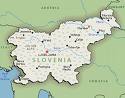
Countries that border Slovenia are Austria, Hungary, Croatia and Italy. Slovenia enjoys 29 miles of coastline along the Adriatic Sea. Its land size is 7,780 sq. miles, slightly smaller than New Jersey (46th rank among U.S. states). The capital city is Ljubljana, whose population is 276,000. This size is similar to Lexington, Kentucky, whose population is 282,000. Alabama residents may relate to Ljubljana’s size by adding the populations of Birmingham (233,000) & Auburn (48,000), or by adding the populations of Montgomery (201,000) & Tuscaloosa (80,000). Both summations produce a combined population total of 281,000 residents.
The country’s population is 2 million, smaller than New Mexico (36th rank among U.S. states). 48% of the population live in urban areas. 70% of the population is 15-64 years of age; 16.5% is 65 years and over; and 13.5% is 14 years and under. Life expectancy is similar to citizens in the US: 73.25 years for males and 80.84 for females. According to a 2002 census, Slovenia is 83.1% Slovene, 2% Serb, 1.8% Croat, 1.1% Bosniak, and 12% other or unspecified. 91.1% of the population speak Slovenian, 4.5% speak Serbo-Croatian, 4.4% speak others languages. Official languages are Slovenian, English, German and Italian. 57.8% are Catholic, 2.4% are Muslim, 2.3% are Orthodox, 0.9% are other Christian, 3.5% are unaffiliated, 23% or other or unspecified, and 10.1% have no religious affiliation. Its literacy rate is 99.7% similar to the US.
Its government is parliamentary republic. Like the US, it has three branches: executive, legislative and judicial. The President is the chief of state, and the Prime Minister is the head of government. It also has a constitution. Its GDP per capita is $27,900, half of the US. Its labor force is 914,000 and is divided into 62.8% services, 35% industry, and 2.2% agricultural. Its natural resources are lignite coal, lead, zinc, building stone, hydropower, and forests. 12.3% of the population is below the poverty line.
Slovenia is in the Central European time zone (GMT + 1). It is 6 hours ahead of Washington DC during Standard Time and 7 hours ahead during Daylight Savings Time, which begins the last Sunday in March and ends the last Sunday in October.
Its weather is similar to Lexington, Kentucky but is slightly colder. It enjoys a Mediterranean climate on the coast, continental climate with mild to hot summers, and cold winters in the plateaus and valleys to the east.
It shares many holidays with US: New Year’s, Easter, Labor Day, All Soul’s Day (Halloween), Christmas, Independence Day (celebrated on Dec. 26).
Slovene society is family-oriented. Religion and culture have positively influenced marriage since the divorce rate is low. Families share land in rural areas.
Its history dates back to Roman times. Many buildings date back to the 1100s. There are some ritual and holy places. They have had the Bible translated in the Slovenian language since the time of the Reformation, but they have no New Testament church to date.
Website designed by David A. Paher
This page was last updated: June 12, 2012
Slovenia Time
Central Time Zone
Clocks provided by
timeanddate.com